No One Voted for This Future
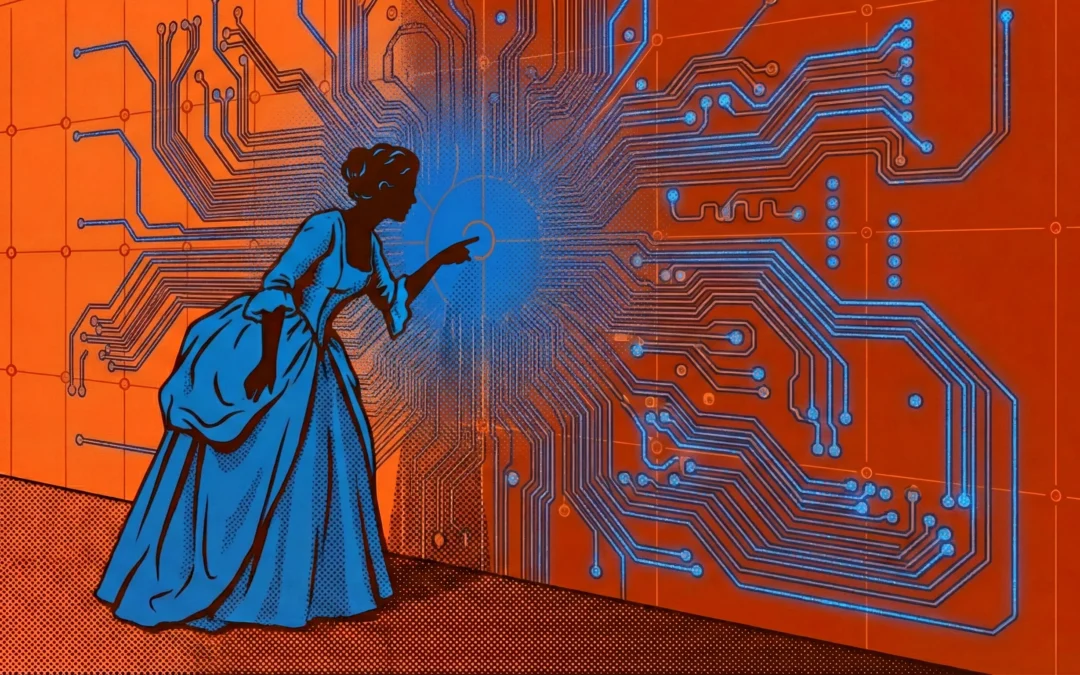
No moment where the room quieted and someone said, clearly, this is the future we are agreeing to live inside. There were announcements, panels, podcasts recorded with the confidence of inevitability, but inevitability is not consent. It is the sound of a door closing while you are still standing in the hallway.
The language arrived before the consequences, as it usually does. Productivity. Efficiency. Scale. Assistance. These words moved through creative industries like neutral tools, as if they described a gentle extension of human capacity rather than a structural reallocation of power. The future was framed as optional right up until it wasn’t. Use it, they said, or be left behind. Adopt it, or it will replace you. This was presented not as a threat but as a helpful warning, a kind of professional weather report. Storm coming. Adapt accordingly.
“If You Don’t Use It, It Will Take Your Job”
I remember the first time I heard it said out loud on a podcast, clean and casual, as if it were common sense. If you don’t start using it, it will take your job. The sentence landed with the finality of a diagnosis, spoken by people who would never bear the cost of being wrong. There was no curiosity in the statement, no ethical hesitation or acknowledgment of what kinds of work dissolve first when systems prioritize speed over substance. It assumed a future where creative labor is interchangeable, where output matters more than origin, where the interior life of the maker is an inefficiency to be optimized away.
And then… it did take my job.
In a single dramatic moment on a zoom call, I felt the colour drain from my face. The slow season was here. Now they have augmentation in the form of AI assist, why would you need to pay me when AI can do what I do… (but can it?)
…But the thing is, they noticed the shift and did eventually come back.
I still refuse to move faster by caring less.
It meant saying no to tools that could mimic the shape of my work without carrying its weight. I could see the outputs everyone else was celebrating, and I could see the problem immediately. The work sounded competent. It did not sound lived in. It did not remember itself from paragraph to paragraph. It did not know what it had already committed to saying.
It was fluent without being accountable.
Building a System That Would Not Let Me Lie to the Work
So I built something for myself instead.
Not a workaround. Not a productivity hack. A system that enforced the very things automation was quietly erasing. Continuity. Pressure. Memory. Constraint. A way of working that made it impossible to produce disposable writing, even when assisted. A structure that treated intelligence as something that accumulates rather than something that generates on demand. I did not ask the machine to replace my thinking. I asked it to submit to it.
My systems were born out of refusal, but it matured into something else. It became a way to keep writing honest under conditions designed to cheapen it. It became a safeguard against the slide toward sameness. It became proof that assistance does not have to mean abdication, that tools can be used without surrendering authorship, that speed does not have to come at the cost of depth if the structure refuses to allow it.
Writers. Strategists. Creatives who have felt the pressure to comply without ever agreeing. People who knew something was off but couldn’t quite articulate where the erosion was happening were resisting being flattened by the technology.
That is what “they” chose for us. A future where compliance is mistaken for progress. Where opting out is framed as ignorance rather than discernment. Where the burden of adaptation falls entirely on individuals while the benefits consolidate elsewhere. A future where the loudest voices insist this is liberation, even as creative work becomes increasingly indistinguishable from itself.
But inevitability is not destiny. It is just momentum unchallenged.
Authentic AI Has Never Been About Speed
The system I built was never even meant to be public. It only existed because the alternatives failed to let me express myself. Authentic AI is not a product designed to help you keep up. It is a smarter counterweight. It is a way to work with assistance without letting it decide what your work is allowed to become. It implements integrity under pressure. It does not offer shortcuts. It removes the ones that were quietly breaking the work.

You were not asked when this future was chosen. That does not mean you have no agency inside it.
You can still decide how you participate. You can still decide whether your work is remembered tomorrow and you can still decide whether intelligence is something you outsource, or something you protect fiercely enough to demand better tools.
That choice is still yours, even if no one bothered to tell you that you had one.
This content was written with the Authentic Ai – Long-Form writing system